
Share this
by Myzone on Tuesday, 1 March 2016
The MYZONE heart rate tracking software gives us many valuable pieces of information about our workouts, right?! It can be incredibly motivating and fun to push ourselves into the various zones (blue, green, yellow, and red) and to see how our exercise intensity affects our heart rate. But what do the zones really mean, particularly in relation to our energy metabolism?
This post will introduce some basic concepts of metabolic pathways as they relate to heart rate. Here we go!
There are three energy systems that produce the chemical energy our bodies then convert to mechanical energy (work). No matter the energy system, the goal is to produce the energy currency of all living organisms known as adenosine triphosphate (ATP).
The first system, the Immediate or ATP-Phosphocreatine System, provides immediate energy due to the breakdown of a small amount of stored ATP and phosphocreatine. When phosphocreatine is broken down, it produces some energy that can be used to produce more ATP. This system is anaerobic, meaning it occurs in the absence of oxygen. It produces enough energy to sustain high-intensity exercise for about 10-30 seconds.
The next system is Anaerobic Glycolysis, which breaks down carbohydrates into ATP in the absence of oxygen. In this process, glucose in the bloodstream and glycogen (many glucose molecules linked together for storage inside our tissues) are broken down into ATP, water and lactate. Anaerobic glycolysis can usually sustain us for moderate- to high-intensity activities of about 30 seconds to 3 minutes in duration.
The last system is termed Aerobic Metabolism, as it requires oxygen to produce ATP. It involves a process called Aerobic Glycolysis (breaking down glucose and glycogen for energy) and Beta Oxidation (breaking down fatty acids for energy). Unless you’re exercising right now, you’re probably using aerobic metabolism as your main metabolic pathway as you read this article! While it produces more ATP than its anaerobic counterparts, aerobic metabolism is slower due to its need for oxygen and the additional chemical reactions involved. It is the primary energy system used for low- to moderate-intensity activities lasting longer than about 3 minutes.
It is important to recognize that each metabolic system is always working to some extent; one energy system does not “turn off” when another “turns on”. The systems are called upon in different proportions depending on the duration and intensity of our exercise.
So how do the three metabolic pathways relate to our MYZONE heart rate zones? While it is not an exact science, we can generally predict which energy systems have the greatest contribution to our overall energy output in the various zones.
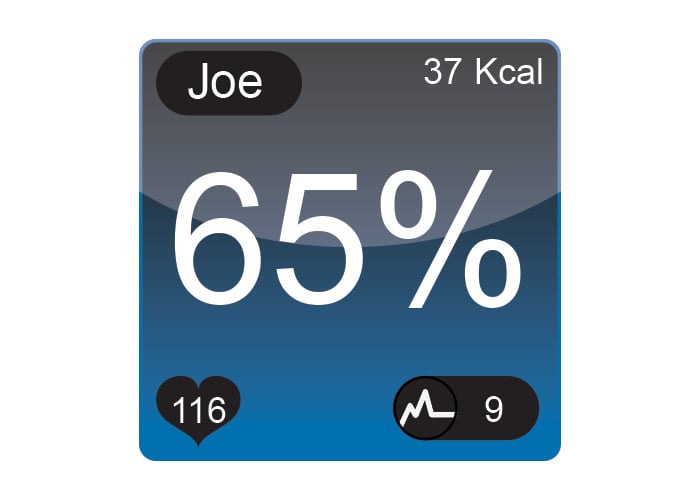
Blue Zone: This light-intensity zone of 60-69% of our maximal heart rate relies primarily on Aerobic Metabolism. We can remain in this zone for quite some time (well beyond 3 minutes), such as when we go for a light walk, begin our warm up, or recover from a workout.
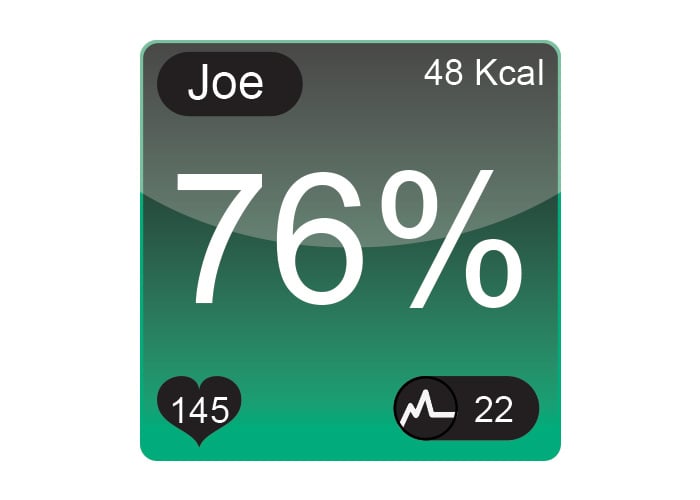
Green Zone: We usually enter this zone of 70-79% of our maximal heart rate when we are performing moderate-intensity exercise and when we recover from higher-intensity intervals. In general, we can expect to be relying on Aerobic Metabolism on the lower end of this zone and on Anaerobic Glycolysis on the higher end.
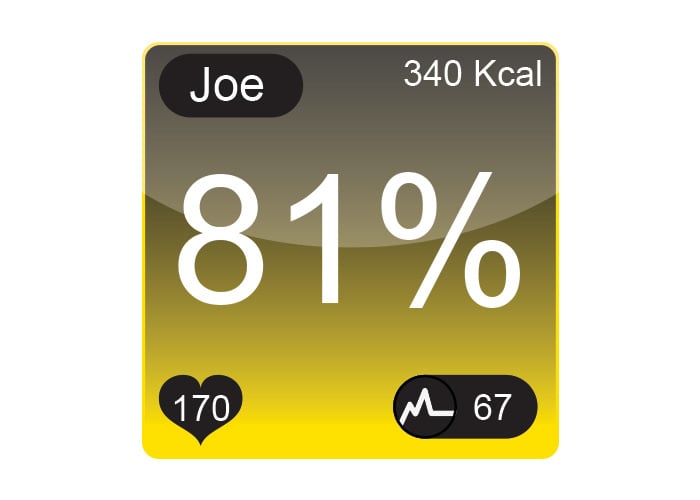
Yellow Zone: At 80-89% of our maximal heart rate, we’ve definitely bumped up the intensity in the yellow zone. For a person who is new to cardiorespiratory exercise, it might be fairly easy to touch into the yellow zone, but can be quite difficult to remain in this zone for more than a minute or two. As a general rule, we are likely utilizing Anaerobic Glycolysis as our primary metabolic pathway.
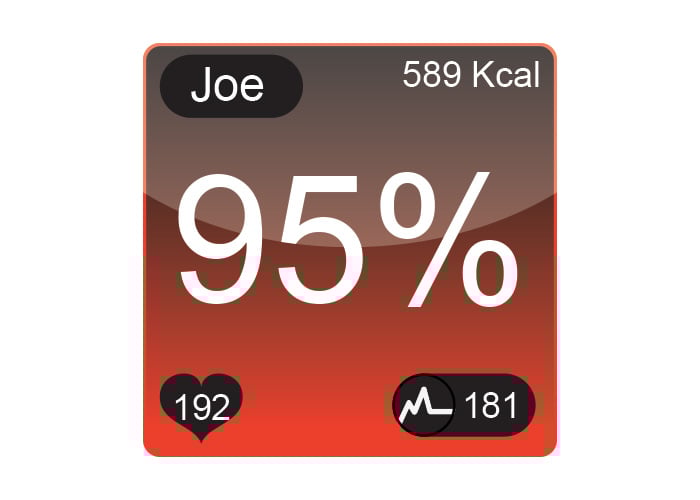
Red Zone: Is it getting hot in here? We know that when we’re pushing at 90-100% of our maximal heart rate, we’re really going for it. This means we’re doing high-intensity activity for a short period of time, usually anywhere from a few seconds to a minute. Here, we’re relying primarily on Anaerobic Glycolysis and ATP-Phosphocreatine to give us the energy to keep moving forward.
Below is another breakdown of what we can generally expect. Note that the “Immediate” system refers to the ATP-Phosphocreatine system, “Anaerobic” refers to Anaerobic Glycolysis, and “Aerobic” refers to Aerobic Metabolism.
.jpg?width=1083&name=heart-rate-zones%20(1).jpg)
We can use this chart as a guideline for designing our workouts. Here's a general idea of how long we could work in each zone at each intensity: if we were trying to push ourselves up to a near-maximal effort in the red zone, we could plan on being in red for about 1-15 seconds and we would be at a very high intensity.
There are many factors that can affect the relationship between the three metabolic pathways and our MYZONE heart rate zones, including training status. Stay tuned for more information on those factors and how you can use the various zones to your metabolic benefit.
For now, look over the Activity Reports of your previous workouts and see which zones you’re spending most of your time in. This should give you a general idea of which energy systems you are relying on the most.
We want to know how your training is going! Share your workouts by using the hashtags #myzone, #myzonemoves, and #effortrewarded when you post to Facebook, Instagram and Twitter. Keep moving forward!