
Share this
by Lauren Delahoy on Wednesday, 2 September 2026
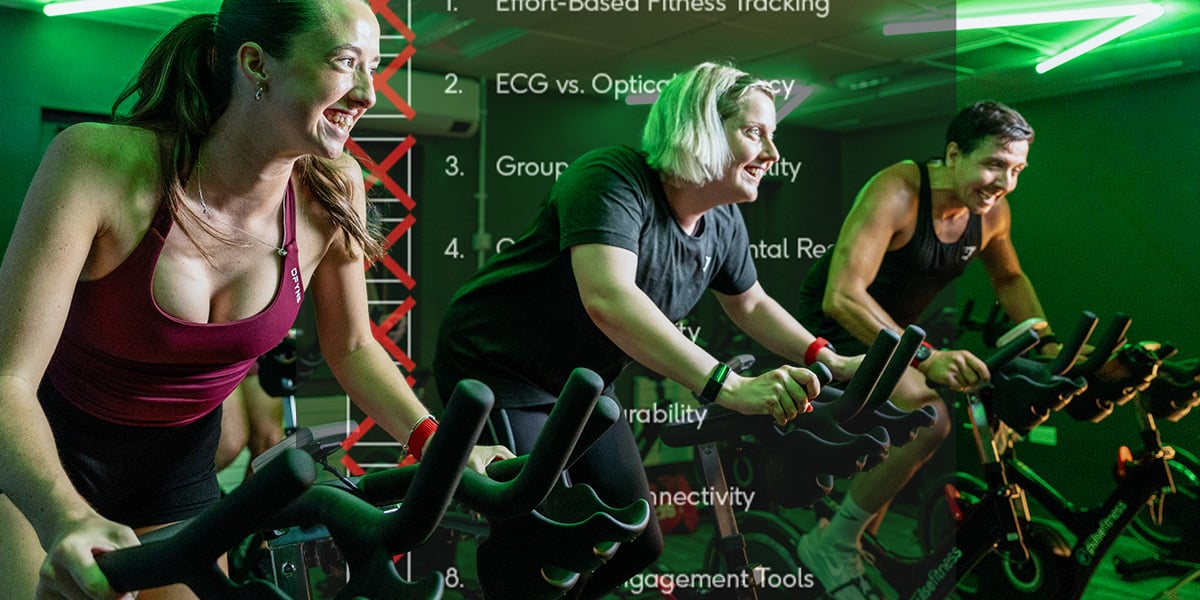
Myzone is a motivation ecosystem, Motivation Technology (MoTech) built to help members build lasting habits. That happens through effort-based recognition, Myzone Effort Points (MEPs), community, challenges and rewards, all grounded in behavioural science.
Heart rate data is what makes that recognition possible, so the wearable still matters. It works through accurate, effort-based tracking, and members can join in on a Myzone device, or through their existing Apple Watch, Wear OS or Garmin smartwatch via Myzone Go, whichever fits how they already move.
If you're choosing the technology that will sit at the centre of your members' experience, here's what's worth checking before you commit.
Quick Checklist: 9 Things to Look For
- Effort-based recognition: rewards heart rate intensity, not raw speed or power
- Accuracy you can trust: ECG and optical sensors that hold up during fast, intense movement
- Group class compatibility: live, multi-user displays members can follow together
- Outdoor and off-grid readiness: waterproofing, temperature resistance, onboard memory
- Battery longevity: long stretches between charges, so sessions never get interrupted
- Everyday durability: built to handle sweat, drops and daily wear
- Universal connectivity: Bluetooth and ANT+ pairing across phones and cardio equipment
- Member engagement tools: gamification, challenges and community leaderboards
- Operator insights: dashboards that help you spot and support disengaged members early
9 Things to Check Before You Choose
1. Does It Reward Effort, Not Just Ability?
A beginner working flat-out and a seasoned athlete cruising through the same class shouldn't be measured the same way. The right system gives both of them a fair way to be recognised for what they're actually putting in, so effort becomes the thing that counts, not fitness level.
With Myzone, that's the job of Myzone Effort Points (MEPs): points awarded for time spent in personalised heart rate zones, so everyone in the room, regardless of ability, has something to chase.
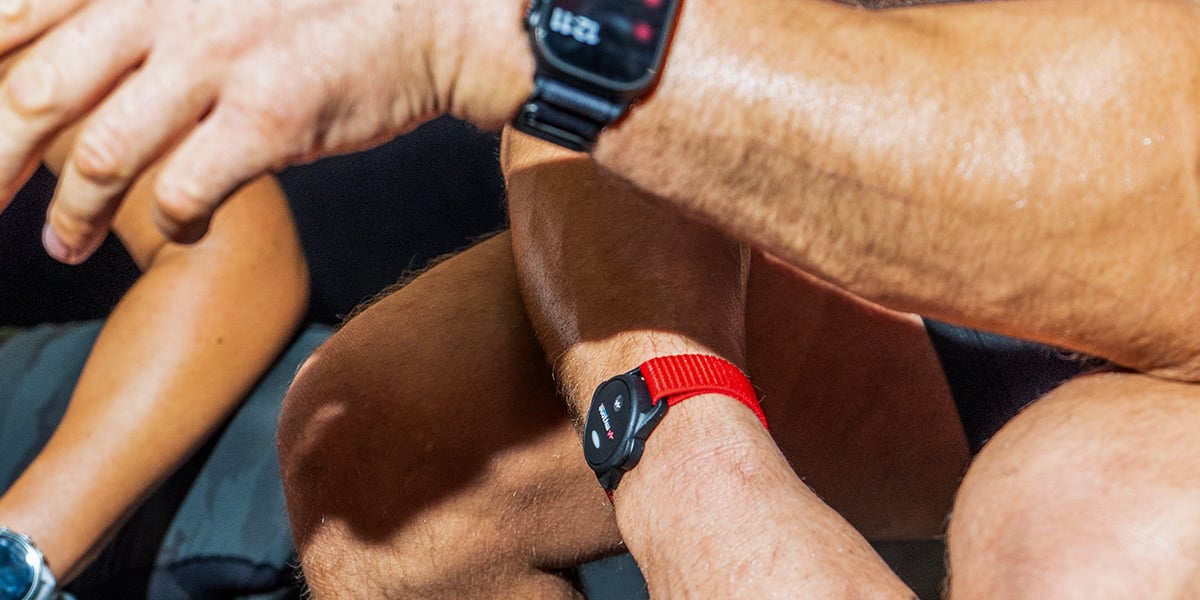
Worth knowing: Myzone's MZ-Switch wearable can be worn on the chest for ECG precision, the wrist for everyday cardio, or the forearm for lifting, and colour-coded mBright displays broadcast each member's zone and effort live during group classes. Members who'd rather use their own device can connect an Apple Watch, Wear OS or Garmin watch through Myzone Go.
2. Is the Accuracy Reliable When Things Get Fast?
Members trust the numbers on the screen to reflect how hard they're actually working, particularly in HIIT, strength training and swimming, where a lagging or inaccurate reading undoes the whole point of tracking effort.
ECG chest straps read the heart's electrical signal directly, which makes them the most dependable option during fast or high-intensity movement. Optical wrist sensors read blood flow through light instead. They're convenient for everyday use, but can lose the signal during heavy lifting or rapid arm motion.
Worth knowing: Myzone's chest strap sensor is tested to 99.4% accuracy against ECG; its wrist and forearm optical sensor to 95%.
3. Will It Keep Up With a Full Group Class?
Part of what makes group training work is watching effort update in real time, together. A system built for classes should handle dozens of simultaneous connections without members losing their place on the board.
Look for smooth member check-ins, live leaderboards, and displays that reflect changing effort as the class moves through it.
4. Is It Ready for Outdoor and Off-Grid Sessions?
Boot camps and outdoor sessions mean rain, heat and patchy signal. A wearable with onboard memory lets members train away from their phone entirely, then sync everything once they're back in range.
Worth knowing: the MZ-Switch stores up to 36 hours of exercise data onboard, so a weekend away from the app doesn't mean losing the effort behind it.
5. Will the Battery Last Between Sessions?
A device that dies mid-session breaks the flow of a workout, and adds one more thing for your team to manage. Longer battery life between charges means less daily upkeep and fewer interruptions.
Worth knowing: the MZ-Switch runs for three to six months between charges, depending on whether it's worn on the chest or as an optical sensor.
6. Is It Built for Daily Wear and Tear?
Gym equipment takes a beating, so look for impact-resistant housings, anti-corrosion contacts and straps that hold up to regular washing. Integrated options, like a heart-rate-ready sports bra or compression shirt, can also help the module stay comfortably in place through a session.
7. Does It Connect However Members Already Move?
Members shouldn't have to change devices, apps or habits to take part. Dual Bluetooth Low Energy (BLE) and ANT+ support means a wearable can pair with your club's cardio equipment, mobile apps, and third-party platforms like Strava and MyFitnessPal, all at once.
8. Does It Turn Effort Into Something Worth Coming Back For?
Numbers on a screen don't build a habit on their own; recognition and community do. Look for features that turn a workout into something social: effort points, monthly challenges and milestones that give members a reason to show up again.
Worth knowing: Myzone reports that facilities offering effort-based recognition through MEPs, challenges and community features see up to a 33% increase in visit frequency.
9. Does It Help You Support Members, Not Just Track Them?
The most useful data isn't just for members, it's for you. An admin dashboard that surfaces attendance and effort trends over time means you can spot who's drifting away early enough to reach out, rather than finding out when they don't renew.
Worth knowing: facilities using Myzone report up to a 25% increase in 12-month member retention.
How Myzone Compares
|
Criteria |
Myzone |
Consumer Wrist Wearables |
Basic Chest Straps |
|
Accuracy |
99.4% (chest ECG) / 95% (optical) |
Optical: varies by brand |
ECG: varies by brand |
|
Group screen integration |
Native (mBright) |
Not typically supported |
Rare, and often complex to set up |
|
Effort-based scoring |
Yes (MEPs) |
No |
No |
|
Retention dashboards |
Yes |
No |
No |
|
Wear positions |
Chest, wrist, forearm |
Wrist only |
Chest only |
Stats on visit frequency and retention are Myzone-reported figures (myzone.org). Device specs (accuracy, memory, battery) reflect the current MZ-Switch listing on myzone.org — please confirm both against the latest published figures before this goes live, in case they've since been updated.