Share this
by Joanna Walker on Thursday, 7 May 2026
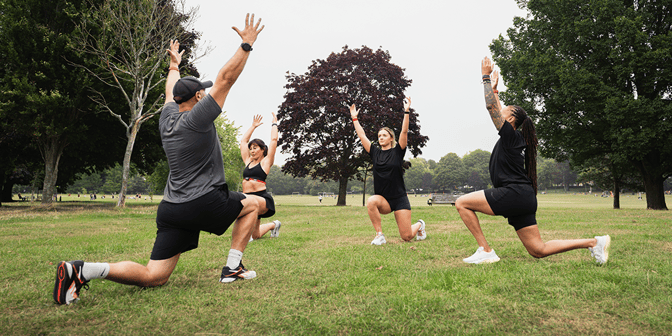
Learn how Motivation Technology unites in-club and remote members into one connected movement community.
Why social fitness needs Motivation Tech at its core
Motivation Technology is at its most powerful when it brings people together. While heart rate monitors, apps and screens can transform individual workouts, the real magic happens when these tools connect members into a shared movement community across locations and channels.
Social fitness—the idea that we move more, and more consistently, when we feel connected to others—is central to this approach. Platforms that allow members to follow friends, join groups and take part in shared challenges tap into our natural desire for belonging and friendly competition. When effort is visible to others in a supportive environment, it becomes easier to stay accountable. In-club, this can be seen in group classes where live tiles and leaderboards show everyone’s effort in real time. Members cheer each other on as colours change and points accumulate, turning what could be an intimidating experience into something collaborative and fun. This same dynamic can extend to small group training, open gym sessions and even low-intensity classes when the technology is used sensitively.
Digitally, communities form through app-based groups, social feeds and notifications. Members can share achievements, comment on each other’s workouts and receive encouragement from coaches and peers. Notifications that highlight friend activity—such as completing a new status level or joining a challenge—can prompt others to log a session of their own. For operators, cultivating this sense of connection has clear business benefits. Research into connected fitness experiences has shown that members with more active social networks within an app generate significantly more effort and are more likely to stay engaged over time. The combination of friendly accountability and visible progress makes your club part of their daily routine.
To maximise the impact of social fitness, it’s important to be intentional. Define the tone of your community—supportive, inclusive and effort-focused—and empower your teams to model that behaviour. Provide simple on-ramps for new members, such as beginner-friendly challenges and welcome groups, so they feel comfortable joining in. Ultimately, connected communities turn Motivation Technology from a set of features into a living culture. Your members are no longer just users of a platform; they become participants in a shared mission to move more and feel better together.
To learn more about the power of social fitness and how it drives deeper connections and retention, read this in-depth feature: Myzone on why social fitness is more powerful than community.
Blending in-club and remote experiences into a single ecosystem
Blending in-club and remote experiences into a single ecosystem is one of the biggest opportunities in Motivation Technology. Members no longer see their gym solely as a place they visit; they expect a brand that moves with them, whether they are training on-site, at home or outdoors.
A connected ecosystem starts with a common currency of effort. When the same heart rate zones, tiles and effort points apply in every context, members feel that all movement counts. A workout completed in a studio class, a run in the park and a living-room session with bodyweight exercises can all contribute to the same challenges, streaks and status levels. Mobile apps and smartwatch integrations are key enablers here. They allow members to participate in your club’s motivational ecosystem using devices they already own, reducing friction to entry. When live workout tiles and effort streams can be viewed on phones, tablets or TV screens, the experience of “seeing yourself on the board” is no longer limited to the physical facility. For operators, this blended model opens up more flexible programming. You can run hybrid challenges that combine in-person classes with remote sessions, offering different time slots and formats to suit varied schedules. Members who travel frequently or work irregular hours can stay engaged because they never feel disconnected from the community.
Communication is equally important. In-app messaging, push notifications and email updates keep members informed about upcoming events, challenge standings and personal milestones. Sharing leaderboards, highlight reels and success stories across digital channels helps everyone feel part of the same movement, regardless of where they train. From a data perspective, a unified ecosystem provides a richer picture of member behaviour. Instead of only seeing check-ins or class attendance, you can understand total effort across locations and contexts. This insight supports more targeted retention strategies and helps identify new service opportunities, such as remote coaching or corporate partnerships.
Ultimately, blending in-club and remote experiences through Motivation Technology turns your facility into a hub of an always-on movement community. Members stay connected to your brand not just for the hour they are on the gym floor, but throughout their daily lives.
To see how a heart rate-based platform supports in-club and remote movement, explore this overview of wearable fitness technology, and discover why social fitness is more powerful than traditional community in this article from Athletech News.
Activating workplaces and communities through connected challenges
Workplaces, schools and local communities represent enormous potential for movement-based initiatives—and Motivation Technology can be the spark that brings them to life. By creating connected challenges that span locations and time zones, organisations can drive participation, wellbeing and a sense of shared purpose.
For workplaces, effort-based challenges that reward every level of fitness can unite departments and remote workers. Employees can join teams, set shared targets and see live leaderboards that show collective effort points rather than only individual rankings. This reduces intimidation and encourages people to support colleagues who are just starting out on their activity journey.
Community organisations, from councils to sports clubs, can use similar models to encourage active lifestyles. Seasonal campaigns—such as “Move into Spring” or “Winter Wellness”—can invite residents to log any form of movement that raises heart rate, from walking the dog to structured exercise classes. When participants see their tiles and cumulative effort displayed on screens at local facilities or online dashboards, the impact of their contributions becomes visible. Educational settings offer another avenue.
Schools, colleges and universities can incorporate Motivation Technology into PE programmes, intramural sports and wellbeing weeks. Teachers and student leaders can run class-versus-class or house-versus-house challenges where effort points create a level playing field across varying abilities. In each case, storytelling and recognition make the difference. Spotlighting participants who achieve major milestones, overcome barriers or rally others to join can humanise the data. Sharing these stories through internal channels and social media turns individual effort into a shared narrative of progress. Partnerships amplify reach.
Gyms and studios can collaborate with employers, councils or event organisers to provide the platform, programming and coaching that underpin challenges. In return, they gain increased brand visibility and new member leads from engaged participants. By activating workplaces and communities through connected, effort-based challenges, Motivation Technology becomes more than a gym tool—it becomes an engine for population-level wellbeing. It shows people that every step, every class and every heartbeat contributes to something bigger than themselves.
For an example of how a global brand uses social fitness to build deeper connections, explore this feature from Athletech News: Why social fitness is more powerful than community.