
Share this
by Jesse N. Thomas on Friday, 7 January 2022
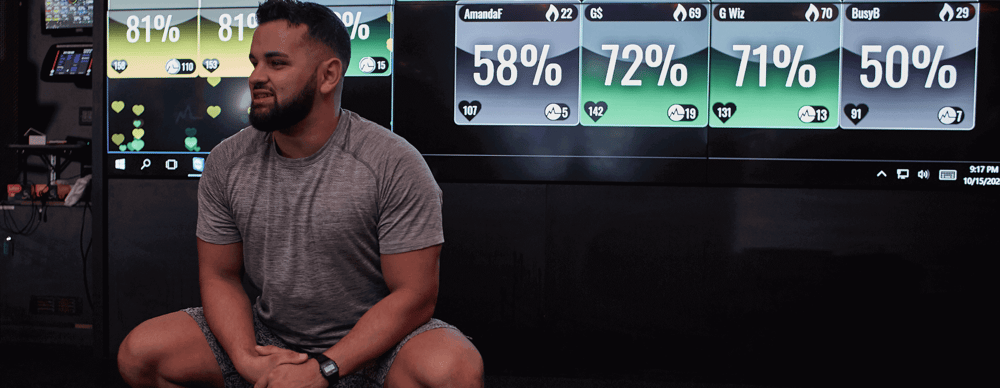
Myzone breaks the percentage of estimated maximum heart rate into five colour-coded zones so you can see how much effort you are putting into your workouts. Training in each of these zones will put different demands on your cardiovascular system and depending on what you want to achieve, you should spend time in all of the zones during your workouts.
Generally speaking, the lower the intensity of your exercise, the longer you can keep going. The higher the intensity or the harder you’re working, the less time you can maintain that level of activity. And the fitter you are, the longer you will be able to train at a certain intensity.
Endurance athletes typically train in the lower intensity zones for longer periods of time, while explosive power athletes train at higher intensities for shorter durations.
Myzone’s grey zone (50-59 per cent of your Max HR) is very low intensity. Essentially this is light activity or recovery and something you can do all day.
The blue zone is moderate intensity (60-69 per cent of your Max HR). Endurance athletes will stay in this zone for one to four hours at a time when training for long distance races or events. If you’re new to exercise, you’ll quickly pass through the blue zone as your heart rate rises to adjust to the new activity. If you’ve been training for some time, you’ll have to put in more effort to get up to the higher intensity zones.
The green sone (70-79 per cent of your Max HR) is a moderately high intensity training zone and if you’re used to exercising, you can stay in this zone from 90 minutes to two hours. The green zone is the lower middle of the high intensity range and is the ideal zone for improving your fitness at a comfortable effort.
The yellow zone (80-89 per cent of Max HR) is a high intensity zone which is a race pace for most people. The bottom of the yellow zone is where muscle fatigue begins to set in for strength training exercises, while the upper end is where aerobic exercise begins to shift to anaerobic exercise. If you’re just starting out, you will spend most of your training session in the yellow zone, but you’ll really have to put in the extra effort to the stay in this zone if you’ve been training for a while.
The red zone (90-100 per cent of Max HR) is the highest of Myzone’s five zones and you can only safely stay in this zone for a short time. When you’re in the red zone you will be working close to your maximum, so training in this zone intermittently during your workout will benefit you most.
You’ll fatigue more quickly when training at this intensity, so make sure you focus on your technique to reduce the chance of injury. If you’re strength training, the red zone represents the tail end of an exercise or interval and should be very short in duration or for as long as you can hold your technique. When it comes to endurance exercise, you can stay in the red zone for slightly longer because of the lower risk of endurance exercise movement patterns.
Each of Myzone’s training zones are beneficial for most training programmes, so make sure you spend time in all the zones to achieve your training goals.