
Share this
by Myzone on Tuesday, 15 April 2025
As a personal trainer, your job is to ensure each client gets the best results based on their unique physiology and goals. Heart rate training is a powerful tool that allows you to train clients as individuals rather than using a one-size-fits-all approach.
By monitoring their heart rate data, you can tailor workouts to their specific needs, whether that’s fat loss, building endurance or improving lactate threshold.
Tracking your client’s heart rate data also allows you to open up important conversations about lifestyle factors like nutrition, sleep and stress, creating an opportunity to offer a more holistic approach to overall health and wellbeing.
Monitoring intensity for tailored training
Heart rate training gives instant feedback on workout intensity. The outdated method of calculating max heart rate (220 minus age) can be off by as much as 20 beats per minute and using a ‘perceived exertion’ method is wide open to interpretation. Instead, Myzone uses the HUNT Formula, which is backed by research to give a more accurate max heart rate estimate.
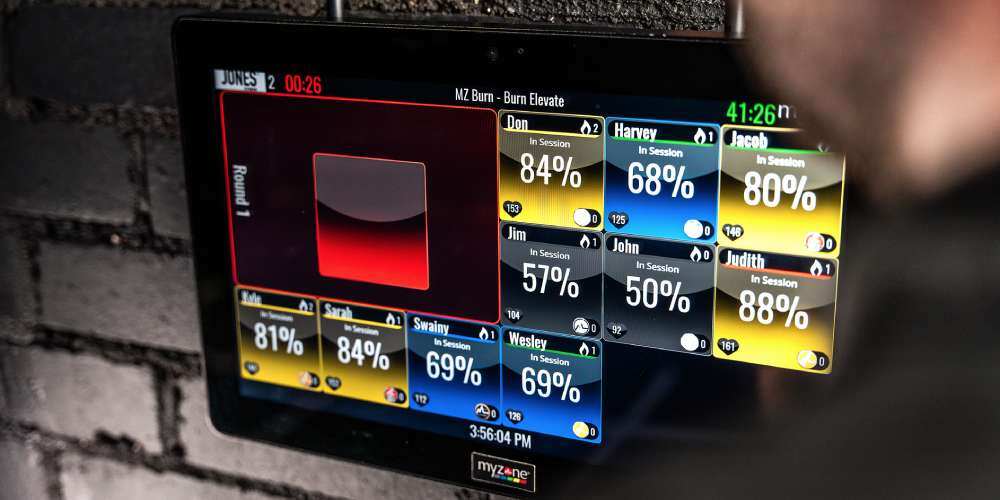
It’s crucial to check your client’s max heart rate is set correctly. If they struggle to reach the red zone (working at 90-100 per cent of maximum heart rate) but feel like they are pushing their hardest, you may need to lower their max heart rate setting.
On the other hand, if they go beyond 95% of their max heart rate too easily, you might need to increase it slightly. These evidence-based adjustments will help ensure clients train at the right intensity to achieve their goals.
Customising workouts based on heart rate zones
Each heart rate zone serves a different purpose and understanding these zones allows you to design effective training programmes:
Fat loss: The blue zone (60–70% of max heart rate) is where the body primarily burns fat as fuel. To maximize fat loss, recommend clients spend 20 to 40 minutes in this zone. After 40 minutes the body will utilise glycogen as fuel.
- Endurance building: Training in the blue-to-green zones (60–80% of max heart rate) helps clients develop a strong aerobic base, improve gas exchange efficiency and sustain longer training sessions. Building endurance takes time, clients will need to train consistently for three to six months to see significant improvements.
- Lactate threshold training: For clients looking to improve performance in activities like Hyrox or competitive endurance sports, you need to push them to the yellow and red zones (80–90%+ of max heart rate). Training at or above their lactate threshold increases their ability to sustain high-intensity efforts before fatigue sets in.
- Active recovery: After an intense session, encourage clients to engage in low-intensity movement in the grey zone (50–60% of max heart rate). This promotes circulation, aids recovery and prevents excessive lactic acid build-up.
A quick word about the red zone. High-intensity training definitely has its benefits, especially if your client wants to improve their VO2 max and lactose threshold.
But many clients mistakenly believe they need to push to their limit in every session, which can lead to overtraining and injuries.
With Myzone, you can easily review your client’s heart rate data and intervene if they are spending too much time in the red zone.
They may be overtraining or their max heart rate may need adjusting. Either way you can have a conversation with your client and get them back on the right path.
Coloured training zones: where the magic happens
Myzone’s unique system of coloured training zones making it super easy for anyone to apply heart rate training effectively.
As a personal trainer, it is much easier to explain to clients the impact and value of training within specific colour zones than it is to talk in terms of percentage maximum heart rate.
Clients can also self-manage their training more effectively between coached sessions. This makes effective, hyper personalised training accessible all propelling people towards their bespoke training goals as quickly as possible.
Using heart rate data to structure workouts
Heart rate data helps structure workouts effectively, ensuring clients perform proper warm-ups, main workouts and cool-downs.
The beauty of tools like Myzone is that it helps you to educate clients on the importance of training at the right intensity.
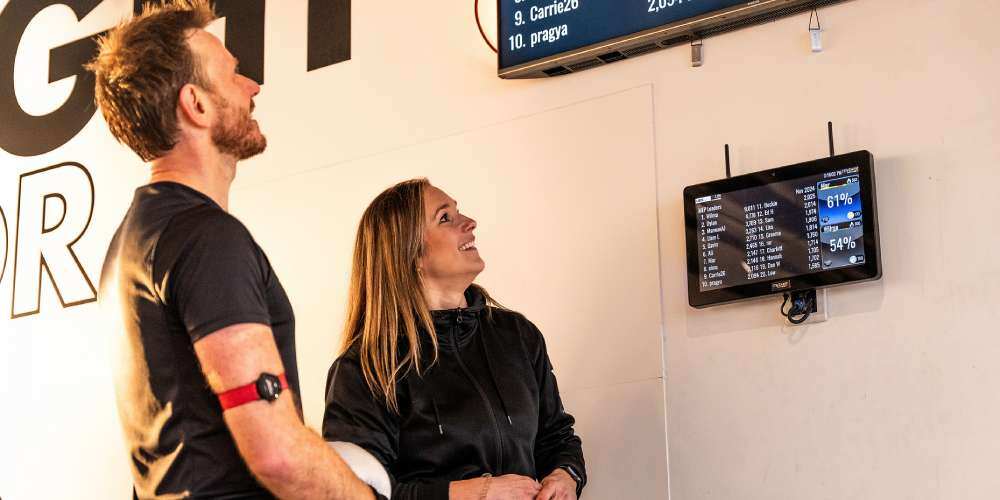
If a client jumps straight into the yellow zone, it’s a sign that they have skipped their warm-up. You can explain how this increases their risk of injury and encourage them to start in the grey zone doing the movement prep, before gradually increasing intensity.
Similarly, cool-downs involve gradually reducing intensity to bring the heart rate down.
If a client’s recovery is slower than usual, they may be overtraining. Adjust their programme accordingly and incorporate de-load weeks as needed.
Heart rate data can also give you a broader insight into your client’s life. External factors like stress, hydration and sleep can impact heart rate, so you may need to have a conversation with your client about making other lifestyle improvements.
Heart rate training allows you to train your clients effectively based on their individual needs.
With the real time data provided by Myzone, you can fine-tune workouts to provide a more informed and impactful service and ultimately elevate the client’s experience.
Find out more about Myzone for personal trainers.