
Share this
by Myzone on Tuesday, 9 August 2016
As a MYZONE user, you’ve probably seen the array of colors on your live stream and Activity Calendar. Gray, blue, green, yellow, red…but what do all these colors mean?
MYZONE has broken down our percentage of maximal heart rate into colorful and convenient zones to help us keep track of our exercise intensity. Today, we break down one of these zones – the GREEN zone.
What is it?
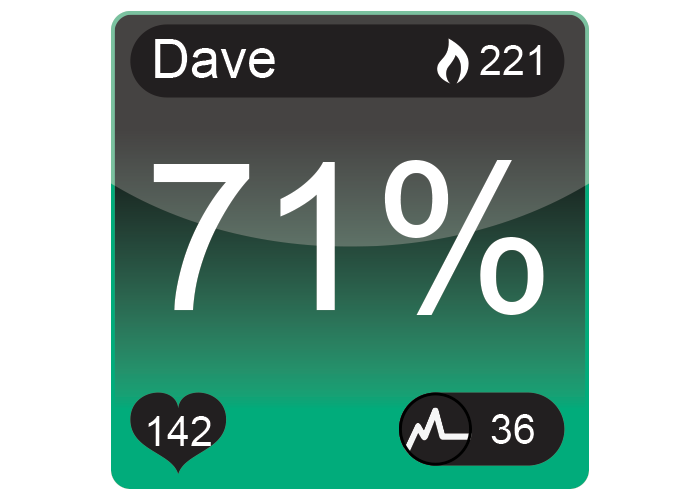
The GREEN zone indicates 70-79% of maximal heart rate. It is appropriate for moderate intensity aerobic activity. We use the term aerobic activity to include both resistance training and cardiorespiratory training as both can be aerobic activities (relying primarily on the aerobic energy system). If we were to compare the GREEN zone to rate of perceived exertion (RPE) on a scale of 1-10, we would expect to be at about a 7 and be able to say a sentence or a few words at a time before needing to take a breath. We earn 3 MEPs per minute in the GREEN zone.

Which activities will have us in the GREEN zone?
We are often in the GREEN zone during the warm-up and steady state cardiorespiratory activities. You’ll probably pass through the GREEN zone during your cool-down, and if you’re performing high-intensity interval training or tempo/pace training, the GREEN zone might be your recovery zone during the “rest” intervals.
The GREEN zone is generally a great target zone for steady state training, when you remain in one zone and around the same % of maximal heart rate for a sustained period of time (try 20-30 minutes to start). When first beginning an exercise program, you might perform steady state training in the BLUE zone, then progress into the GREEN zone. After several weeks-to-months of regular cardiorespiratory training, you may be able to bump your steady state training up into the higher-intensity zones (YELLOW and RED).
In high-intensity interval training and tempo/pace training, a recovery follows a higher intensity period of exercise (think YELLOW and RED zones). While the specifics of high-intensity interval training and tempo/pace training differ, the GREEN zone is often the target zone for recovery during these types of training.
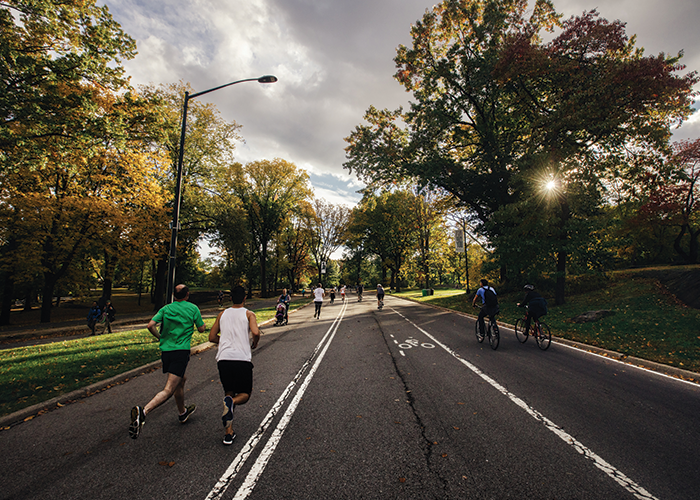
Some exercise types that often take us to the GREEN zone include: a light jog, a long bike ride with some wind resistance, bodyweight resistance training, and the recovery portion of high-intensity interval training.
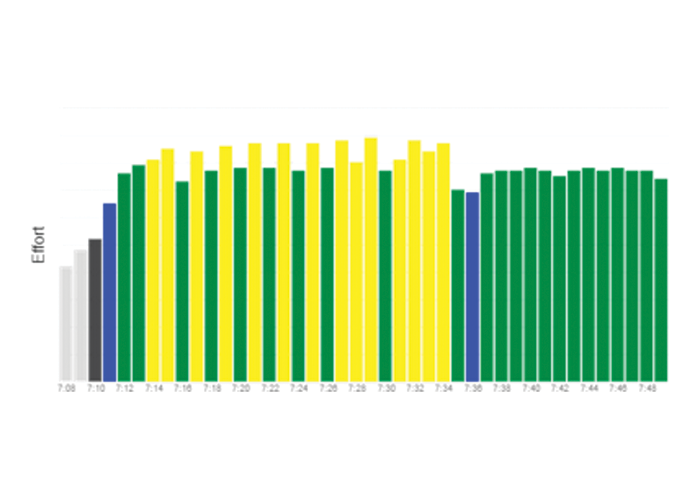
Image Caption: Here’s the profile of my recent run. After the warm-up, I got into some high-intensity interval training on the treadmill – 1 minute sprint and 1 minute walk. You can see how my heart rate recovered into the GREEN zone every other minute (see 7:12 - 7:26). After the intervals, I walked on an incline at a steady pace and remained in the GREEN zone for several minutes (see 7:37 – 7:49).

What are the benefits of working in the GREEN zone?
Some of the benefits of training in the GREEN zone include:
Build your aerobic base – this is your body’s ability to take in and utilize oxygen. With GREEN zone training, we see an increase in our vascularity and our mitochondrial density. These changes allow more oxygen to flow to our muscles and be utilized within our muscle cells to produce more energy.
Work closer to your aerobic capacity – this is your body’s maximal ability to efficiently take in and utilize oxygen. The closer we work to our aerobic capacity, the better we become at using aerobic metabolism to produce energy.
**Improving our aerobic base and working closer to aerobic capacity allow us to work harder for longer and with less effort.
Recover efficiently – using the GREEN zone as a target recovery zone during high-intensity interval training and/or pace/tempo training is a good way to monitor your recovery and to make sure your body is ready to push into the next work interval. Faster recovery is a sign of improved fitness as your cardiorespiratory system is becoming more efficient at adjusting to workload or stimulus demands. Here’s a game you can play to ensure that you’re recovering effectively.
How often should we be in the GREEN zone?
This will depend on the type of exercise you’re performing. The World Health Organization & American College of Sports Medicine recommend that adults perform >150 minutes of moderate-intensity (BLUE & GREEN zone) cardiorespiratory activity per week, or 30 minutes per day.
If you’re doing endurance-type exercise (such as cycling at a relatively fixed work rate for a sustained period of time), you can aim for >150 minutes in the GREEN zone per week.
If you’re pushing into the YELLOW and RED zones during your workouts, you might use the GREEN zone as part of the warm up, cool down, and recovery intervals. If that’s the case, you can perform fewer overall minutes of exercise per week. Just be sure to listen to your body and take a rest when you need it in order to prevent overtraining.
To see our answers to frequently asked questions about the BLUE and GREEN zones, check out our previous post.
We want to know how your GREEN zone workouts are going! Post your workouts and your MYZONE Workout Summaries on Twitter, Facebook, and Instagram using the hashtags #MYZONE, #myzonemoves, and #effortrewarded.
For more tips on how to effectively use your MYZONE workout wearable, follow us during Fitness Fridays on Periscope – 8 am PST, 11 am EST.
Keep moving forward!