
Share this
by Myzone on Monday, 12 October 2026
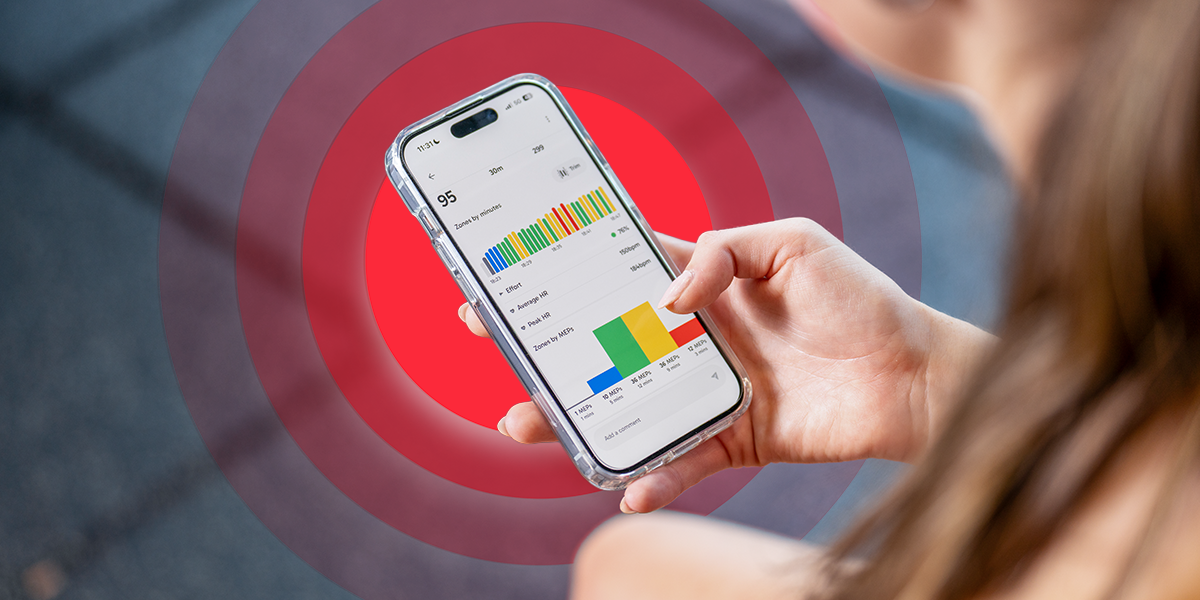
January is fast approaching, and for fitness operators, that traditionally means one thing: acquisition. Campaigns ramp up, membership offers go live and a new wave of people arrive determined that this will finally be the year they exercise more.
But while January remains one of the biggest opportunities to bring new members through the door, the more important question is what happens next.
By February, the initial excitement has started to fade. By March, work, family commitments and everyday life are competing for attention again. The members who already have established exercise habits will probably keep coming, but many of those who joined with good intentions rather than an established routine will start to disappear.
These are the ‘casual movers’, and they represent one of the biggest opportunities for operators in 2027.
The challenge isn't turning them into fitness fanatics. It's helping them move often enough, and for long enough, that exercise becomes a consistent part of their lives. That means operators need to start thinking about January retention long before January arrives.
Acquisition gets them through the door. What happens next keeps them there.
The fitness industry is very good at creating reasons to join. January is full of them. New Year offers, introductory memberships, transformation programmes and fresh-start messaging all tap into a moment when motivation is naturally high.
But motivation fluctuates. A member who is enthusiastic during their first week won't necessarily feel the same way six weeks later. If their membership experience relies on them continuing to motivate themselves, operators are leaving a huge part of the retention journey to chance.
Recent UK research illustrates the challenge. In January 2026, 43% of British gym-goers surveyed by Atom bank said they were paying for a fitness subscription they hadn't used in at least two weeks. Atom Bank
That's why the first few months of membership matter so much. A new member needs more than access to equipment. They need reasons to come back. They need to see progress, experience small wins, feel recognised and, increasingly, feel connected to other people.
The question for operators heading into January shouldn't simply be, "How many members can we acquire?" It should be, "What are we going to do with them once they're here?"
Consistency is the behaviour worth building
One of the mistakes we make in fitness is assuming people need bigger goals to stay motivated. Lose more weight. Run further. Lift heavier. Train harder.
For someone who already loves exercise, those goals can be powerful. For a casual mover, they can feel a very long way away.
Behaviour change works differently. Lasting habits are built through repeated behaviours, achievable goals, feedback and reinforcement. The more opportunities someone has to experience progress, the more reasons they have to repeat the behaviour.
This is where gamification has a much bigger role to play than simply making exercise more entertaining.
A meta-analysis of 16 randomised controlled trials involving 2,407 participants found that gamified interventions had a significant positive effect on physical activity. Meanwhile, a systematic review of 50 studies found goal setting, progress bars, rewards, points and feedback were among the most frequently used elements in physical-activity gamification. PubMed
More recent research supports the importance of achievable goals too. A 2024 systematic review and meta-analysis of insufficiently active adults found that setting specific goals had a large positive effect on physical activity. PubMed
For operators, the practical implication is relatively simple. Don't make the casual mover wait three months to feel successful.
Give them something they can achieve this week. Recognise that they've come back. Show them that their effort counts. Give them another goal when they achieve the first one. A series of small reasons to keep moving can ultimately be more powerful than one big reason to start.
The social side of fitness matters more than ever
Consistency isn't only built through goals and rewards. It's also built through people.
The gym has historically been treated as somewhere people go to exercise individually, but the member experience is becoming increasingly social. Classes, run clubs, Challenges, training groups, digital communities and shared goals all give people something that equipment alone can't provide: a sense that they're part of something.
That matters commercially because connection can strengthen the reasons someone has to keep participating.
According to ABC Fitness's 2026 Wellness Watch research, 67% of members agree that community is the biggest driver of motivation and accountability in their fitness routine, while 57% of active consumers say being part of a fitness community significantly impacts their long-term commitment to an active lifestyle. ABC Fitness
For a casual mover, that connection can be particularly important. They may not yet identify as someone who exercises. They might not know anyone in the club. They may feel intimidated by members who appear fitter, stronger or more experienced.
Creating ways for those members to participate alongside others can change the experience completely. Suddenly they're not simply trying to motivate themselves to go to the gym. They're contributing to a shared goal, receiving encouragement or seeing that other people just like them are moving too.
This is where Challenges can become particularly effective. Research from London Sport and Opinium found that 42% of people who signed up to a fitness challenge said they stuck to their New Year's goals beyond January, compared with just 10% of those who didn't. Opinium
The important point isn't that every gym should create more competition. In fact, for some casual movers, traditional competition can be counterproductive. If every leaderboard is dominated by the club's most active members, the people you're trying hardest to engage may quickly decide it isn't for them.
The opportunity is to use Challenges to create participation, connection and consistency, rather than simply winners.
Gamification shouldn't just reward the fittest person in the room
This principle sits at the heart of Myzone.
Myzone Effort Points, or MEPs, reward members based on effort relative to their own maximum heart rate. That means success isn't determined by who is fastest, strongest or burns the most calories. A beginner and an experienced athlete can exercise alongside one another and have their individual effort recognised. Myzone
Around that effort metric sits a wider layer of gamification designed to give people reasons to keep participating. Members can work towards monthly goals, progress through Status levels, build Streaks, receive recognition and take part in Challenges with other Myzoners.
Challenges are particularly interesting when we think about casual movers because they create a short-term reason to participate within a much longer-term journey.
Myzone data shows that during Challenges, members record 38% more workouts, burn 38% more calories and earn 41% more MEPs. Myzone
For an operator, the most interesting number there isn't necessarily calories or MEPs. It's workouts.
If the objective is to turn an inconsistent member into a consistent one, every additional workout matters. It's another visit, another positive experience and another repetition of the behaviour we're trying to establish.
The same principle applies to recognition. Rather than only celebrating dramatic transformations or the people at the top of a leaderboard, operators can recognise consistency itself. Someone completing their third workout of the week is progress. Someone returning after a period away is progress. Someone reaching a monthly activity goal for the first time is progress.
When we broaden what success looks like, we create many more opportunities for members to experience it.
Retention starts long before someone thinks about cancelling
There's another reason operators need to think beyond January acquisition.
Members rarely go from highly engaged to cancelling overnight. Disengagement tends to happen gradually.
Three visits a week become two. Two become one. A regular class disappears from someone's routine. A missed week becomes two missed weeks, and eventually the membership is something they're paying for rather than something they're using.
By the time the cancellation request arrives, the opportunity to influence that behaviour may already have passed.
The real opportunity is to recognise and respond to changes in engagement earlier, while there's still an active relationship with the member. That might mean a message from a member of staff, an invitation to a Challenge, recognition of previous progress or simply a reason to come back that doesn't make the member feel judged for having disappeared.
We've seen the potential of this approach at Westpark Fitness in Dublin, where Myzone has been embedded into a broader member-engagement strategy encompassing Challenges, staff recognition, social interaction and deliberate re-engagement.
Westpark reports that members using Myzone visit the club 33% more often and are 20% more likely to still be members after 12 months. The operator has also calculated more than €1.1 million in retained membership value among its long-term Myzone users. This demonstrates the commercial value associated with a membership that is consistently engaged. Myzone
And that is ultimately the opportunity.
Think beyond the January rush
January will always matter. It's a moment when millions of people are actively thinking about moving more, and operators should absolutely capitalise on that demand.
But perhaps the industry needs to broaden its definition of a successful January.
Success isn't only the number of memberships sold in the first four weeks of the year. It's what happens to those members afterwards.
Are they still exercising in February? Have they established some consistency by March? Do they feel connected to the club? Are they receiving recognition for their effort? Does someone notice when their participation starts to decline? And, six months after that initial burst of New Year motivation, are they still moving?
Those are the questions operators should be planning for now.
Because the biggest opportunity in January isn't simply acquiring another wave of members. It's taking the people who want to move more, but haven't yet found a way to make it stick, and creating an environment that helps them succeed.
Not everyone walking through the doors in January will become a fitness fanatic. They don't need to.
If operators can turn more casual movers into people who move consistently, they'll create healthier members, stronger communities and a more resilient membership base.
January might get them started. What you do next is what keeps them moving.