
Share this
by Myzone on Thursday, 17 November 2016
When we think of resistance training exercises that keep us in good heart rate zones, the squat is probably one of the first to come to mind, right?
Squats are included in many fitness programs for a reason – they have been shown to be very effective at improving muscular fitness. The squat is a compound multi-joint exercise that primarily targets the glutes, quadriceps, and hamstrings. It also requires involvement of the muscles of our back, lower legs, and abdominals.
In this Exercise Spotlight, we’ll talk about why we love squats, how to properly perform a squat, how to modify a squat, and squat variations.
Please keep in mind that the squat is a complex exercise; correct form, modifications, and progressions will vary person-to-person. As such, we cannot tell you how you should be squatting in this post; we will simply provide the basic information for you to build upon. This post is written for exercisers who do not have any lower extremity injuries and who have goals focused on general fitness, rather than sports performance. Please consult a personal trainer to find out if squats are appropriate to include in your workouts.
Why We Love Squats:
- You can do them almost anywhere.
- They transfer to functional activities and athletic performance.
- They are metabolically demanding and keep you in good heart rate zones.
- They are a total-body exercise.
- There are countless variations to keep them interesting.
- You can modify them in many ways to make them more accessible to different individuals.
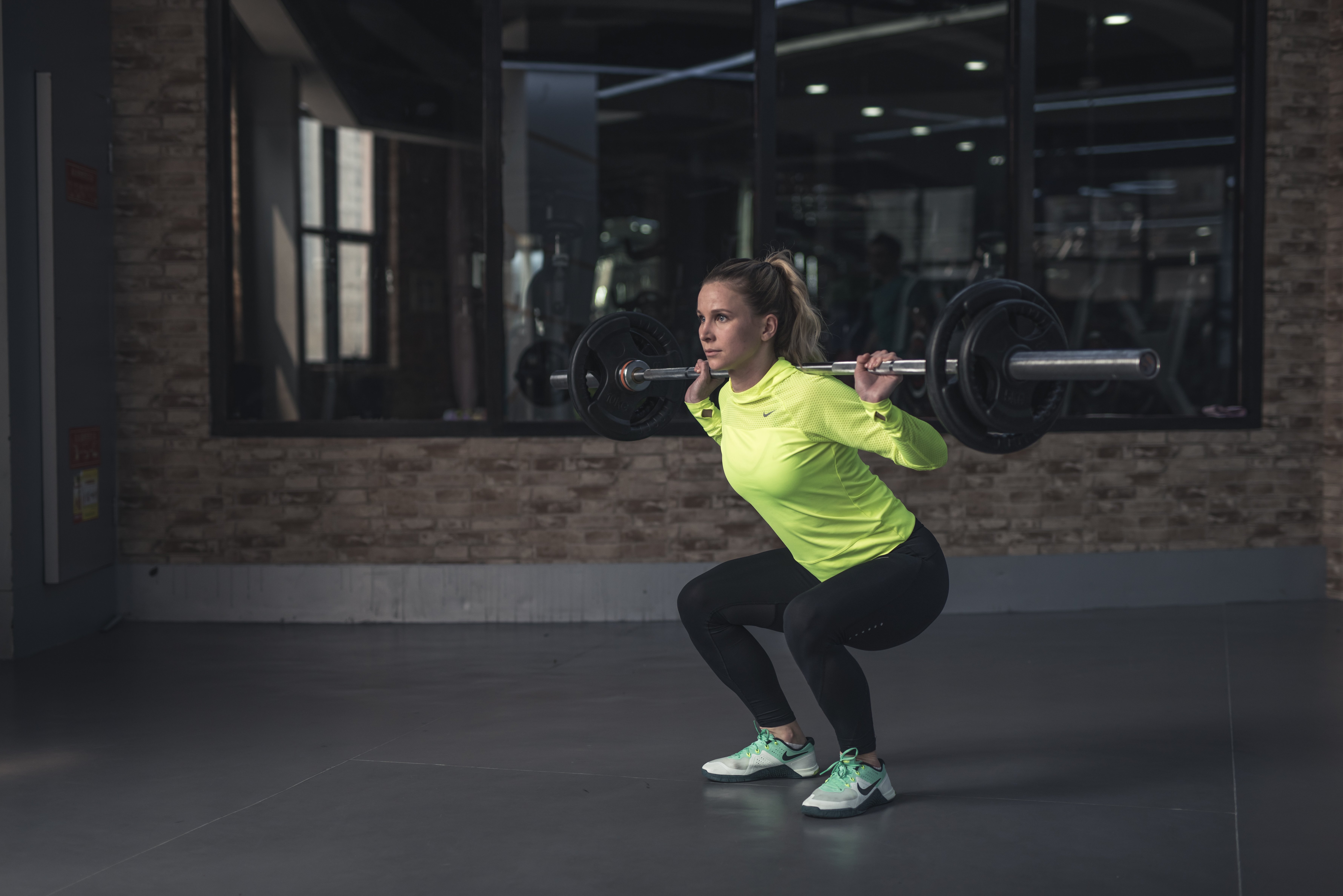
How to Perform a Basic Squat:
- Separate your feet about hip-width or a little wider than hip-width apart. Place your feet parallel or slightly turned out.
- Make sure your knees are aligned with your second and third toes.
- Slowly sit your hips back and bend your knees. It should look like you’re reaching your bottom toward a chair behind you.
- Keep your chest lifted and head and neck in a neutral position.
- There are various claims made as to how low you should go in your squat, so we will say this: go as low as you can with control and without any movement compensations (a few of which are described below).
- To get back up, press your heels firmly into the ground and drive your hips forward as you straighten up to a standing position. Be sure to squeeze your glutes tightly!
- Repeat.
Common Movement Compensations to Look Out For:
**Please consult a personal trainer to see if you are using any movement compensations during your squat.
Knees caving inward: If you notice your knees pointing inward of your feet as you ascend from your squat, think of pressing your knees outward. While your knees are unlikely to move wider than your feet, trying to press them out may achieve the goal of keeping them in line with your second and third toe.
Rounding or arching of low back: A proper squat maintains a slight, natural arch through the low back. Pressing your hips backward and keeping your chest lifted tall will help to facilitate this.
Excessive forward lean of torso: Some squatters must lean more forward than others due to their body’s unique dimensions. However, a general goal is to keep your chest lifted throughout the squat.
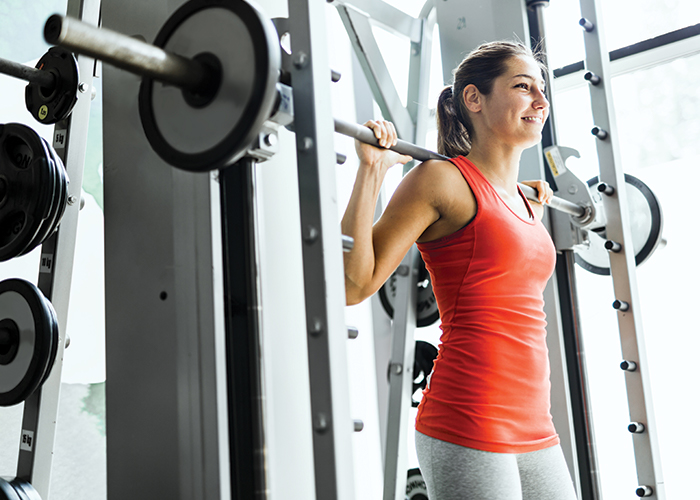
How to Modify a Squat
**Please consult a personal trainer to learn the best way to modify your squats to safely meet your individual needs.
- Don’t go as low.
- If you do not yet possess the proper form to go lower in your squat (thighs parallel to the floor is often desired), you can perform a half squat or quarter squat instead. Focus on form so you can progress lower without movement compensations.
- Start in a chair.
- Squats are highly transferrable to an activity you probably do every day – sitting down from a standing position and standing up from a seated position. If you’re new to squats, you may find it helpful to perform them using a chair as a guide for squat depth and for a little more control. Follow the same steps as listed in the “How to Perform a Basic Squat” section, but lower yourself down into a stable, upright chair. As you progress, you can begin to perform squats without the chair.
- Step wider.
- For individuals who lack the ankle mobility, squatting can be very challenging. Stepping your feet a little wider may make it easier for you squat lower.
- Hold onto a bar.
- If balance is a limiting factor for you during your squat, place your hands on a ballet bar or any stable surface that is about the height of your belly button. Perform your squats with this balance assistance, but be sure to keep your shoulders back and down and your chest lifted.
How to Progress a Squat:
You may progress your squats in the following ways:
- Increase the amount of weight you are lifting during your squat.
- Increase the speed of the concentric phase of your squat (when you come back up).
- Try a variation!
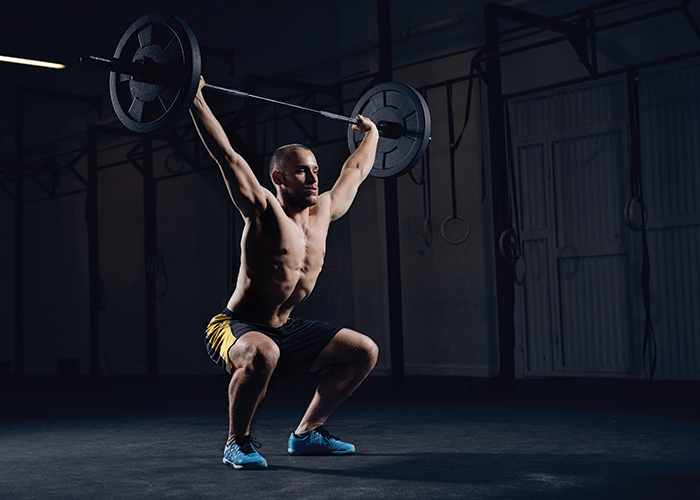
Some Squat Variations:
Air Squats
Air squats are also known as bodyweight squats – you can perform them anywhere with no equipment required! It is important to perfect an air squat before moving onto other squat variations.
Back Squats
This type of squat is performed with a barbell typically placed on your upper trapezius (behind the top of your shoulders). Back squats are excellent for building lower body hypertrophy and strength.
Front Squats
This type of squat is performed with the barbell placed across the front of your shoulders. The positioning of the barbell tends to emphasize the quadriceps to a greater extent than back squats, but the glutes and hamstrings to a lesser extent.
Box Squats
You may perform a box squat using a plyo box, bench, or chair. At the lowest point of your squat, your glutes will touch the surface of the box, bench, or chair. You may sit all the way down or simply tap the surface and rise back up.
Goblet Squats
Hold a vertically positioned dumbbell in your hands, with your palms up and elbows tucked by your sides. When you lower down, keep your elbows inward of your knees.
Single-Leg Squat
These are tough, but they are great for identifying and evening out muscle imbalances! Bend your left knee and lift your left foot off the ground as you perform your squat. Repeat on the other side. We recommend starting out with just your bodyweight to perfect your single-leg squat form before adding any weight.
Sumo Squat
Unlike a traditional squat, a sumo squat requires you to step your feet wider apart and angle your toes away from the midline of your body (more of a turn out). Of course, always make sure your knees are aligned in the same direction as your feet. This variation gives your adductor muscles, or your inner thighs, a little extra challenge.
Curtsy Squat
Begin with your feet parallel, hip-width apart. Step your left foot at a diagonal behind you and to your right, as though you are curtsying. Be sure to bend both knees and lift your chest. Press off your left foot to return to the starting position. Repeat on the other side.
Jump Squat
Get your heart rate zones up with the jump squat! At the top of your squat, jump into the air as high as you can. When you land, lower yourself into your next squat. These are great for earning lots of MEPs!
Squat Tuck Jumps
If you thought the jump squat was a challenge, brace yourself for squat tuck jumps! At the top of your squat, jump into the air and draw your knees up toward to your chest. Separate your feet to hip-width apart as you descend from the jump so you can get back into starting position for your next squat.
Squat Jacks
Begin in a standing position with your feet together. Separate your feet as you jump up, so that when you land your feet are parallel, about hip-width apart. Perform a squat, then jump back up to starting position with your feet together.
We want to see how you’re including squats in your workouts and staying in your heart rate zones! Be sure to post photos or videos of your workouts to Facebook, Instagram, and Twitter using the hashtags #myzonemoves and #effortrewarded so we can see how you’re doing!
For more exercises and tips on heart rate zones using MYZONE in your training, check out our #FitnessFriday Facebook Live broadcasts on the MYZONE Facebook page every Friday at 8 am PT, 11 am ET.
Keep Moving Forward!