
Share this
by Myzone on Tuesday, 24 January 2017
Many of us push ourselves with moderate and high-intensity cardio and resistance training, but how many of us take the time to pause for a well-rounded stretch routine? If you’re like us, it sometimes becomes easy to neglect stretching because we’re so pumped to move our bodies!
Whether you’re incorporating flexibility training into your current workout program or not, this post is a must-read.
Flexibility, the range of motion of our joints, is an important component of fitness for many reasons. According to the National Academy of Sports Medicine (2008), flexibility training is used to:
- Correct muscle imbalances
- Increase joint range of motion
- Decrease excessive tension of muscles
- Relieve joint stress
- Maintain normal functional length of all muscles
- And more!
One key reason to practice flexibility training is to correct and prevent muscle imbalances, which occur when some muscles surrounding a joint become overactive and others become underactive. Muscular imbalances can lead to improper posture and movement and, eventually, injury. Whether your daily activities require you to be physically active or not, we all perform repetitive motions (such as sitting at a desk or even working out) that can lead to muscular imbalances.
Flexibility training is often divided into static stretching and dynamic stretching. While we’ll only cover static stretching in this post, you can check out our tips for a dynamic warm-up here.
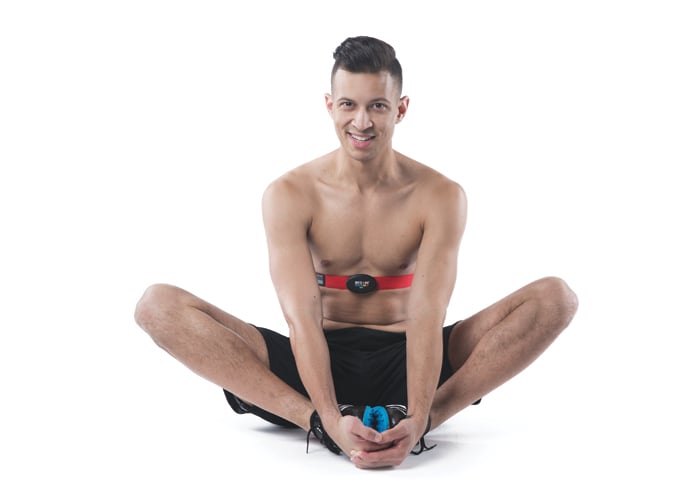
When to Perform Static Stretching
It is typically recommended that we perform dynamic stretching in our warm-up and that we perform static stretching in our cool-down or as a stand-alone stretching session. Attempting to stretch statically prior to at least a warm-up (if not a full workout) may result in injury, so make sure that you warm up prior to static stretching. If a dynamic warm-up isn’t an option for you (such as if you’re in a class that goes straight into static stretching), be extra mindful to ease your way into your stretch.
We should perform flexibility exercise for all major muscle groups on at least two or three days per week. A simple way to incorporate flexibility exercise into your routine is to set aside 5-15 minutes after each workout to get in some static stretches for the major muscle groups you focused on in your workout.
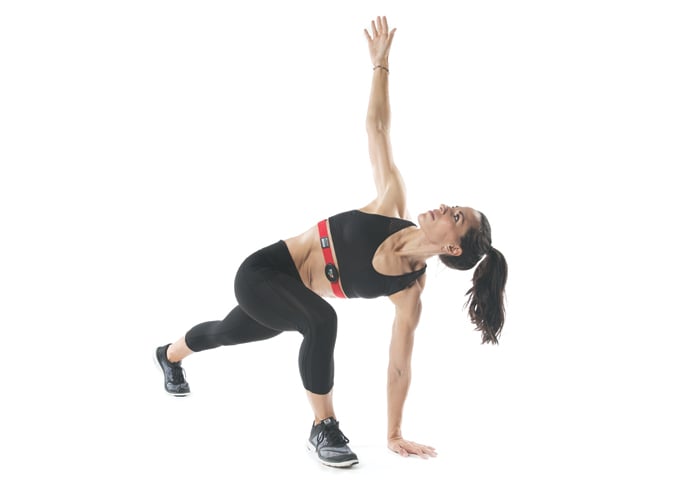
How to Perform Static Stretching
To perform a static stretch, slowly move into the stretch position until you feel slight tension in your muscles, but not pain. If you feel sharp pain in your muscle or joint or if your muscles are not able to relax after holding your stretch for about 20 seconds, you have gone too far and should ease back on the stretch. After sustaining your static stretch for about 20 seconds, you should feel that the tension decreases and that the stretch is easier to hold.
Recommendations for how long you should hold a static stretch differ depending on which resource you are using. Some texts suggest 15-30 seconds per stretch, others say at least 20 seconds, and some say 30-60 seconds. A rule of thumb we find effective is to perform two sets of all stretching exercises and to hold each stretch for 30 seconds at a time. If you have specific flexibility goals, you may hold each stretch for a little longer or perform more sets.
Don’t forget to breathe! Breathing can actually be a way to enhance your stretch. Exhale as you move into your stretch, and then continue to take deep breaths in and out for the duration of your stretch. If you want to sink a little deeper into a stretch, do so as you exhale.
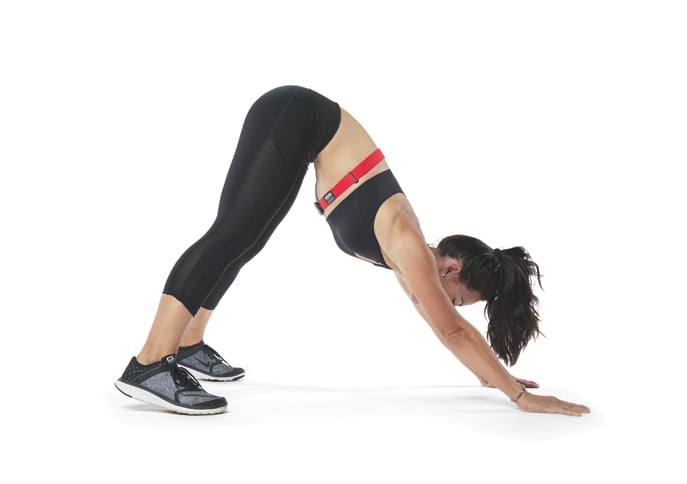
Organizing Your Static Stretching Routine
While it’s not a bad idea to target all major muscle groups in a static stretching routine, it isn’t always the most time-efficient option for us. When selecting stretches, think about which major muscle groups you targeted in your workout. If you hit chest and back, most of your static stretches should focus on your chest and back. If you performed a total-body workout, it will be wise to select stretches that hit each major muscle group.
If you’re crunched for time, you may be able to combine two stretches at once. For example, instead of doing a low lunge and a standing side reach separately, you can perform a low lunge and add a side reach for an added bonus.
Here are some muscle groups that you can think about targeting in a total-body stretch routine:
- Lower Body:
- Glutes
- Hip Flexors
- Hamstrings
- Calves
- Quadriceps (Thigh)
- Adductors (Inner Thigh)
- Abductors (Outer Thigh & Glutes)
- Upper Body:
- Chest
- Upper-, Mid-, and Lower-Back
- Neck
- Shoulders
- Arms
- Abdominals
We’ll perform sample static stretches for you in an upcoming #FitnessFriday Facebook Live broadcast. We’re live every Friday at 8 am PT, 11 am ET on the MYZONE Facebook page. You can also catch all of our previous videos on the MYZONE YouTube page.
We hope you will work on your flexibility by adding some static stretching to your routine! When you do, be sure to post photos or videos of your workouts to Facebook, Instagram, and Twitter using the hashtags #myzonemoves and #effortrewarded so we can see how you’re doing!
Keep Moving Forward!
References:
National Academy of Sports Medicine. (2008). NASM essentials of personal fitness training. Clark, M.A., Lucett, S.C., Corn, R.J. (Eds.). Baltimore, MD: Lippincott Williams & Wilkins: